
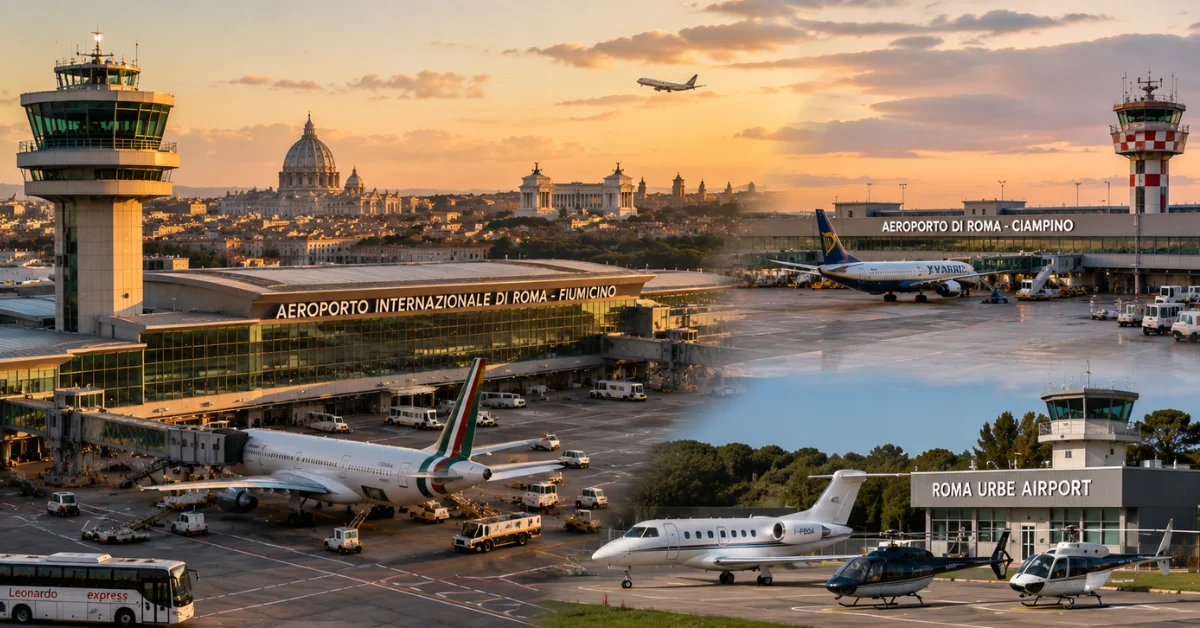
If you are planning a trip to the Italian capital, you may be wondering how many airports are in Rome Italy. The answer is straightforward: Rome has three airports, but only two serve scheduled commercial passenger flights. The city’s primary gateway is Leonardo da Vinci–Fiumicino Airport (FCO), while Ciampino Airport (CIA) mainly handles low-cost and regional flights. The third airport, Rome Urbe Airport (LIRU), is dedicated to private aviation, flight training, and general aviation rather than commercial airline services. Understanding the role of each airport will help you choose the most convenient option for your journey.
What Are the Airports in Rome?
Rome’s airport system is designed to accommodate a wide range of travelers, from international tourists and business professionals to private jet passengers. While Fiumicino and Ciampino welcome millions of commercial airline passengers each year, Rome Urbe serves a more specialized purpose. Each airport offers different facilities, transport connections, and flight options, making it important to select the one that best suits your itinerary.
| Airport | Airport Code | Primary Use | Approximate Distance from Rome City Centre |
| Leonardo da Vinci–Fiumicino Airport | FCO | International and domestic flights | Around 30–35 km |
| Ciampino Airport | CIA | Low-cost airlines, charter, and regional flights | Around 15–20 km |
| Rome Urbe Airport | LIRU | Private aviation and flight training | Around 8–10 km |
Leonardo da Vinci–Fiumicino Airport (FCO)
Leonardo da Vinci–Fiumicino Airport, commonly known as Rome Fiumicino Airport, is the largest and busiest airport in Italy. Located southwest of Rome, it serves as the country’s primary international gateway and connects travelers to hundreds of destinations across Europe, North America, Asia, the Middle East, and Africa. Most long-haul flights arriving in or departing from Rome operate through Fiumicino, making it the preferred airport for international visitors.
The airport features modern terminals, a wide selection of shops and restaurants, premium airline lounges, efficient baggage handling systems, and excellent transport links to central Rome. Travelers can easily reach the city via the Leonardo Express train, airport shuttle buses, taxis, or private transfers. Because of its comprehensive facilities and extensive airline network, Fiumicino provides a convenient and comfortable travel experience for both leisure and business passengers.
Travelers looking for a smoother airport journey can also book Rome Fiumicino Airport VIP assistance, which includes personalized Meet and Greet services, Fast Track through security and immigration, baggage assistance, lounge access, and dedicated concierge support for arrivals, departures, and connecting flights. These premium services are particularly valuable during busy travel periods when airport queues are at their longest.
Ciampino Airport (CIA)
Ciampino Airport is Rome’s second commercial airport and is particularly popular with travelers flying on low-cost European airlines. Although it is considerably smaller than Fiumicino, it plays an important role in serving short-haul routes and charter flights. Its compact size often means shorter walking distances, faster check-in procedures, and quicker access from the terminal to ground transportation.
Located approximately 15 kilometers from Rome’s historic center, Ciampino is a convenient option for visitors planning short city breaks or weekend holidays. While the airport offers fewer shopping and dining options than Fiumicino, many travelers appreciate its straightforward layout and efficient passenger experience. If your destination is within Europe and you are flying with a budget airline, Ciampino may be the most practical choice.
Rome Urbe Airport (LIRU)
Unlike Fiumicino and Ciampino, Rome Urbe Airport does not operate scheduled commercial airline services. Instead, it primarily supports private aviation, business aircraft, helicopter operations, and flight training activities. Located close to the city center, the airport is commonly used by private pilots, aviation schools, and executive travelers who require flexible flight operations.
Although most tourists will never pass through Rome Urbe Airport, it remains an important part of Rome’s aviation infrastructure. Travelers arriving by private jet or charter aircraft may use Urbe or dedicated private aviation terminals at Fiumicino, depending on their flight arrangements and aircraft type.
Which Airport Is the Main Airport in Rome?
The main airport in Rome is Leonardo da Vinci–Fiumicino Airport (FCO). It handles the majority of international and domestic flights and serves as the primary hub for numerous global airlines. Because of its extensive route network, modern passenger facilities, and direct transport connections to central Rome, Fiumicino is the airport that most international visitors will use.
Whether you are arriving from another European country or traveling from overseas, Fiumicino provides the greatest choice of airlines, flight schedules, and passenger services. Its reputation for efficient operations and continuous investment in modern infrastructure has made it one of Europe’s leading international airports.
Which Airport Is Best for Tourists?
The best airport depends on your travel plans, airline, and budget. For most international visitors, Fiumicino Airport is the preferred choice because it offers the widest selection of airlines, better transport links, and more comprehensive passenger facilities. Business travelers and families also appreciate its modern terminals and premium services, which make navigating the airport more comfortable. Travelers who value convenience can further enhance their journey with VIP service at Rome Fiumicino Airport, making arrivals, departures, and transfers significantly more efficient.
On the other hand, travelers flying with low-cost European carriers may find Ciampino Airport more convenient. Its smaller size allows passengers to move through the airport more quickly, making it a popular choice for short-haul flights. Meanwhile, private aviation passengers typically use Rome Urbe Airport or dedicated private terminals at Fiumicino, depending on their travel requirements
Getting to Rome City Centre
Both commercial airports provide convenient transportation to the city, although the available options differ slightly. Fiumicino Airport is connected directly to Rome Termini Station by the Leonardo Express train, which offers one of the fastest ways to reach the city center. Travelers can also choose regional trains, airport shuttle buses, taxis, private chauffeur services, or pre-booked transfers.
Ciampino Airport does not have a direct train station, but it is well served by shuttle buses that connect passengers with Rome’s metro and railway network. Taxis and private transfers are also widely available, making it easy to reach hotels, tourist attractions, or business destinations throughout the city.
Which Airport Should You Choose?
Choosing the right airport ultimately depends on the type of trip you are planning. If you are traveling internationally, connecting to another long-haul flight, or looking for the best airport facilities, Leonardo da Vinci–Fiumicino Airport is the clear choice. Its extensive airline network, premium amenities, and efficient transport options make it suitable for most travelers visiting Rome.
If you are flying with a low-cost airline within Europe, Ciampino Airport offers a simpler and often quicker airport experience. Travelers using private aircraft or executive aviation services will typically fly through Rome Urbe Airport or specialized private aviation facilities available at Fiumicino.
Enjoy a Stress-Free Journey with VIP Airport Assistance
Large international airports often become congested during holidays, summer travel, and peak business seasons. Long queues at check-in, security screening, immigration, and baggage claim can add unnecessary stress to any trip. Choosing a professional airport assistance service allows travelers to move through the airport more efficiently while enjoying personalized support from arrival to departure.
If you have never used these services before, our guide explaining how airport Meet and Greet services work provides a detailed overview of what to expect.
VIP airport assistance may include:
- Personal Meet and Greet service
- Fast Track through security and immigration
- Baggage assistance
- Escort through the airport
- Access to premium airport lounges
- Departure, arrival, and transit assistance
For travelers seeking an even more comfortable airport experience, it is also worth understanding the difference between a VIP lounge and a business lounge. Knowing what each option offers can help you choose the right level of comfort, privacy, and amenities before your flight.
Frequently Asked Questions
Rome has three airports. Fiumicino Airport and Ciampino Airport handle scheduled commercial passenger flights, while Rome Urbe Airport is primarily used for private aviation and flight training.
Leonardo da Vinci–Fiumicino Airport (FCO) is the largest and busiest airport in both Rome and Italy.
Fiumicino Airport is the best option for international travel because it offers the largest network of global destinations, modern facilities, and premium passenger services.
Yes. Rome Urbe Airport is primarily dedicated to private aviation, business flights, and flight training rather than scheduled commercial airline operations.
Final Thoughts
So, how many airports are in Rome Italy? The city has three airports, each serving a different purpose. Leonardo da Vinci–Fiumicino Airport (FCO) is the main international gateway and the best choice for most travelers, while Ciampino Airport (CIA) provides convenient access for low-cost and regional flights. Rome Urbe Airport (LIRU) supports private and general aviation, making it an important part of the city’s broader aviation network.
Whether you are visiting Rome for business, leisure, or a luxury holiday, choosing the right airport can make your journey more convenient. If you want to save time and enjoy a smoother airport experience, book VIP airport services in Italy before your trip to enjoy personalized Meet and Greet assistance, Fast Track, baggage support, and a seamless arrival or departure experience at major Italian airports.